



TGFβR2
TGFβR2 is the type II TGF-β receptor that initiates signaling after ligand binding and activates TGFβR1/ALK5, which then drives SMAD2/3 transcriptional responses[1]. Mechanistically, TGFβR2 expression levels tune SMAD and MAPK-ERK activation, linking receptor abundance to pathway specificity, p21 induction, and TGF-β-mediated apoptosis[2]. Compared with related TGF-β isoforms, TGF-β2 binds TβRII weakly and depends more on betaglycan, whereas residue differences explain stronger receptor binding by TGF-β1 and TGF-β3[3]. In colorectal cancer, TGFBR2 mononucleotide mutations occur frequently in MSI-high tumors but do not add prognostic value beyond MSI status[4]. In mouse intestinal tumors, epithelial Tgfbr2 loss cooperates with Apc mutation to promote invasion and malignant transformation[5]. For experimental applications, CRISPR/Cas9 TGFBR2 knockout in CAR T cells or ovarian cancer TILs reduces TGF-β immunosuppression and improves antitumor function in TGF-β-rich models[6][7]. A soluble splice variant, TβRII-SE, binds all three TGF-β isoforms and supports fibrosis-model testing of ligand-sequestration strategies[8].- TGFβR2 connects ligand recognition to SMAD2/3 signaling and context-dependent MAPK-ERK activation[1][2]. - TGFBR2 mutation and knockout models support colorectal cancer and immunotherapy mechanism studies[4][5][6][7]. - Isoform-selective binding distinguishes TGF-β2 biology and guides receptor-focused experimental design[3][8].
References:
- [1]. Huang F, et al. Regulation of TGF-β receptor activity. Cell Biosci. 2012 Mar 15;2:9. [Content Brief]
- [2]. Rojas A, et al. TGF-beta receptor levels regulate the specificity of signaling pathway activation and biological effects of TGF-beta. Biochim Biophys Acta. 2009 Jul;1793(7):1165-73. [Content Brief]
- [3]. De Crescenzo G, et al. Three key residues underlie the differential affinity of the TGFbeta isoforms for the TGFbeta type II receptor. J Mol Biol. 2006 Jan 6;355(1):47-62. [Content Brief]
- [4]. Shima K, et al. TGFBR2 and BAX mononucleotide tract mutations, microsatellite instability, and prognosis in 1072 colorectal cancers. PLoS One. 2011;6(9):e25062. [Content Brief]
- [5]. Muñoz NM, et al. Transforming growth factor beta receptor type II inactivation induces the malignant transformation of intestinal neoplasms initiated by Apc mutation. Cancer Res. 2006 Oct 15;66(20):9837-44. [Content Brief]
- [6]. Tang N, et al. TGF-β inhibition via CRISPR promotes the long-term efficacy of CAR T cells against solid tumors. JCI Insight. 2020 Feb 27;5(4):e133977. [Content Brief]
- [7]. Fix SM, et al. CRISPR-mediated TGFBR2 knockout renders human ovarian cancer tumor-infiltrating lymphocytes resistant to TGF-β signaling. J Immunother Cancer. 2022 Jul;10(7):e003750. [Content Brief]
- [8]. Bertolio MS, et al. A Novel Splice Variant of Human TGF-β Type II Receptor Encodes a Soluble Protein and Its Fc-Tagged Version Prevents Liver Fibrosis in vivo. Front Cell Dev Biol. 2021 Sep 10;9:690397. [Content Brief]
-
TGFβR2 Related Products (6)
Related Products (6)

-
Recombinant Proteins (13)
-
Fidrisertib
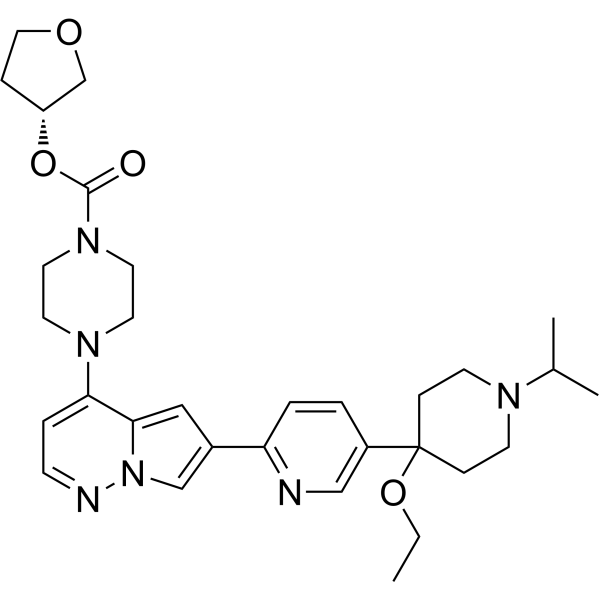 0 ImagesSynonyms: BLU-782; IPN-60130; ALK2-IN-1
-
Klotho-derived peptide 1 hydrochloride
 0 ImagesCat. No.: HY-P10414APurity: 99.67%Synonyms: KP1 (human) hydrochlorideKlotho-derived peptide 1 hydrochloride (KP1 (human) hydrochloride) is a polypeptide with multiple activities including senescence inhibition and renal protection. Klotho-derived peptide 1 hydrochloride binds to TβR2 and ATAD3A, with a Kd value of 1.41 μM for binding to human TβR2 and a Kd value of 0.319 μM for binding to ATAD3A. By binding to TβR2, Klotho-derived peptide 1 hydrochloride blocks the TGF-β/Smad3 and downstream TGF-β signaling pathways, inhibits the expression of miR-223-3p, induces the expression of lncRNA-TUG1, restores endogenous Klotho at the post-transcriptional level, inhibits cellular senescence markers, fibroblast activation and renal tubular epithelial cell apoptosis, blocks cytochrome c release and caspase activation, maintains the integrity of mitochondrial ultrastructure, and restores mitochondrial protein levels. Klotho-derived peptide 1 hydrochloride enters renal tubular epithelial cells via endocytosis, protects against nephrotoxic and hypoxic injuries, and recapitulates the renal protective and anti-fibrotic effects of full-length Klotho. Klotho-derived peptide 1 hydrochloride can be used in research related to kidney diseases such as chronic kidney disease and SARS-CoV-2-associated acute kidney injury.
-
Nisevokitug
 0 ImagesCat. No.: HY-P990009CAS No.: 2649854-92-0Synonyms: NIS-793Nisevokitug (NIS-793) is a humanized IgG2λ monoclonal antibody and an inhibitor of the TGF-β signaling pathway. Nisevokitug blocks the binding of TGF-β to the membrane-bound TGF-βR1/TGF-βR2 receptors, inhibits both Smad-dependent and Smad-independent downstream cascade signaling, downregulates fibrosis-related genes, and reverses the TGF-β-mediated immunosuppressive microenvironment. Nisevokitug can be used in the research of diseases such as pancreatic ductal adenocarcinoma, colorectal cancer, myelofibrosis, and myelodysplastic syndrome.
-
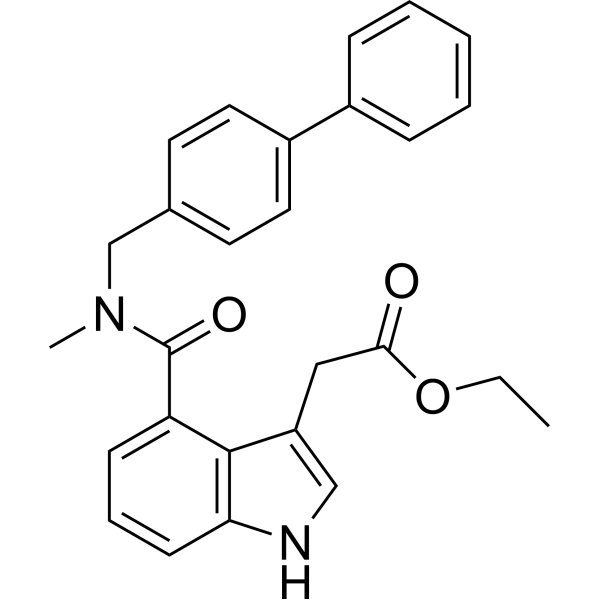
TGFβRII-IN-3
 0 ImagesTGFβRII-IN-3 (Compound 2r) is a selective inhibitor of the TGFβ type II receptor (TGFβ RII) (IC50 = 4.1 μM). TGFβRII-IN-3 inhibits TGFβ signaling by promoting the proteolytic degradation of TGFβ RII. TGFβRII-IN-3 can block endothelial-to-mesenchymal transition and cell migration. TGFβRII-IN-3 can be used in cancer research.
-
Klotho-derived peptide 1
 0 ImagesCat. No.: HY-P10414Synonyms: KP1 (human)Klotho-derived peptide 1 (KP1 (human)) is a polypeptide with multiple activities including senescence inhibition and renal protection. Klotho-derived peptide 1 binds to TβR2 and ATAD3A, with a Kd value of 1.41 μM for binding to human TβR2 and a Kd value of 0.319 μM for binding to ATAD3A. By binding to TβR2, Klotho-derived peptide 1 blocks the TGF-β/Smad3 and downstream TGF-β signaling pathways, inhibits the expression of miR-223-3p, induces the expression of lncRNA-TUG1, restores endogenous Klotho at the post-transcriptional level, inhibits cellular senescence markers, fibroblast activation and renal tubular epithelial cell apoptosis, blocks cytochrome c release and caspase activation, maintains the integrity of mitochondrial ultrastructure, and restores mitochondrial protein levels. Klotho-derived peptide 1 enters renal tubular epithelial cells via endocytosis, protects against nephrotoxic and hypoxic injuries, and recapitulates the renal protective and anti-fibrotic effects of full-length Klotho. Klotho-derived peptide 1 can be used in research related to kidney diseases such as chronic kidney disease and SARS-CoV-2-associated acute kidney injury.




